Your cart

A Closer Look: Scottish Peat vs. Pacific Northwest Peat

A Closer Look: Scottish Peat vs. Pacific Northwest Peat

For centuries, peat has shaped the single malt whiskey landscape. It has perfumed coastal drams with brine and smoke, anchored Highland malts with earthy gravitas, and carried the story of place from bog to glass. In the global imagination, peat and single malt are close siblings, ancient materials bound by fire, fermentation, and time. Though not all single malt whiskeys are peated, many people around the world strongly associate these two things.

Peat, in our eyes, is not a monolith. It is not a singular flavor, nor a fixed expression. It, like so many of our other ingredients, tells the story of time and place. Like grain, water, wood, and climate, peat is an agricultural and geological product of place. It is memory compressed into soil. And as American Single Malt whiskey comes into its own, the question is not whether we can recreate Scotch Peated whiskey, but instead to tell the story of our own place and time through a smoky kaleidoscope.

At Westland, our work with Pacific Northwest peat is not an attempt to replicate Scotch tradition. It is an act of translation. A study in terroir. A commitment to letting American landscapes speak in their own accent.

This is a closer look at Scottish peat versus Pacific Northwest peat—where they come from, how they differ, and why those differences matter.

Peat Beneath the Surface

Peat, at face value, is nothing special. It’s dirt. It’s muddy. And frankly, not very romantic. But peat compounds in peat bogs, which are waterlogged wetlands speckled all over the globe. Peat is slowly decomposing plant matter that accumulates in waterlogged environments over thousands of years. To put things in perspective, each bog grows about one millimeter per year. In the absence of oxygen, mosses, sedges, grasses, shrubs, and trees decay slowly, layer by layer, forming dense, carbon-rich soil.

When air dried, cut with spades, and then slow burned, peat produces a distinctive smoke rich in phenols, aromatic compounds that adhere to damp malted barley during the kilning process. These phenols survive fermentation and distillation, becoming the smoky, medicinal, earthy, or maritime notes that define peated whisky.

But the chemistry of that smoke, its aroma, its texture, its emotional register, is entirely dependent on what grew in the bog, how it decayed, and the environment that shaped it.

In other words: peat is liquid geography.

"At Westland, our work with Pacific Northwest peat is not an attempt to replicate Scotch tradition. It is an act of translation. A study in terroir. A commitment to letting American landscapes speak in their own accent."

Scottish Peat: Heather, Moss, and Maritime Air

Scottish peat is most closely associated with the Highlands and islands—Islay, Orkney, Skye, and the northern mainland. These bogs formed after the last Ice Age and are dominated by sphagnum moss, heather, grasses, and low shrubs, with little tree material.

The result is a peat that tends to burn cool and steady, producing smoke that is:

    •    Medicinal (iodine, antiseptic, bandages)
    •    Maritime (sea spray, brine, kelp)
    •    Earthy (damp soil, moss, mushroom)
    •    Ashy or sooty in structure

This profile is inseparable from Scotland’s climate: cold, wet, wind-swept, and saline. Coastal air drifts across the bogs. Salt settles into the peat. Generations of malting floors and kiln designs refine how smoke is captured and layered into barley.

Scottish peat was originally used as fuel and has become significant cultural infrastructure. It exists within a centuries-old production ecosystem and has found its way into modern operating distilleries that are focused on the future ahead.

Pacific Northwest Peat: Forest Floor, Fern, and Fallen Cedar

By contrast, peat in the Pacific Northwest forms under dramatically different conditions.

Here, peatlands develop beneath towering conifers, dense understory, and persistent rainfall. The organic matter that builds our peat is not heather and moss alone but includes:

    •    Labrador Tea
    •    Douglas fir
    •    Spruce
    •    Ferns
    •    Deciduous leaves
    •    Woody forest debris

The peat itself is darker, heavier, and richer in lignin from decomposed wood. When burned, it produces a smoke that behaves differently and smells different.

Pacific Northwest peat tends to yield phenolic compounds that read as:

    •    Wood smoke rather than medicinal smoke
    •    Campfire and hearth
    •    Charred cedar and resin
    •    Earthy sweetness
    •    Subtle spice rather than iodine

Where Scottish peat evokes coastal iodine and storm-lashed shorelines, Pacific Northwest peat conjures wet forests, smoked timber, and autumn campfires.

Another marker of terroir showing itself again and again in whiskey.

Smoke Is Not Just Smoke

It is tempting to treat peat as a simple flavor additive: a switch that turns “smoky” on or off. But smoke is structure, not just aroma. Peat contributes to the whole whiskey experience, mouthfeel, aromatic softness or harshness, and more.

Different peats generate different ratios of phenols, cresols, guaiacols, and syringols. These compounds interact with yeast metabolism, copper contact, and oak maturation in subtle but lasting ways.

At Westland, we’ve found that Pacific Northwest peat integrates into spirit differently than Scottish peat:

    •    It tends to feel softer and rounder on the palate
    •    Less sharply medicinal
    •    More integrated with malt sweetness
    •    More expressive of wood and cereal notes

In other words, it behaves less like an overlay and more like a harmonic.

This matters deeply for American Single Malt. Our category is built on barley, fermentation character, and new-world oak influence. A peat that dominates those elements would obscure the very things we are trying to elevate.

The other thing we have to remember is that there were no American distilleries or malthouses for that matter producing peated malt when we first started distilling whiskey. It was our own audacious effort to build the relationships and infrastructure to manage a supply chain that could make American peated malt.

Our peated malt sits at a modest 8-12 ppm of phenolic content, whereas many Scottish malts have between 50-100ppm. Our peated malt is softer, herbal, and extremely approachable. So with this in mind, we like to say that Pacific Northwest peat supports, rather than overpowers, our malt-forward house style.

From the beginning, Westland’s philosophy has been clear: we are not here to reproduce Scotch. We are here to express place.

That commitment is visible in every production decision we make, from sourcing Washington-grown barley to working with Pacific Northwest oak, to building long fermentations that amplify yeast-derived fruit notes and cereal character.

Time, Patience, and Responsibility

There is also an ethical dimension to this work.

Peat is a finite, slow-renewing resource. Many Scottish peatlands are now protected, and rightly so. Over-harvesting threatens delicate ecosystems that take millennia to form.

In the Pacific Northwest, peatlands are equally precious and equally vulnerable.

At Westland, our use of peat is deliberately limited, deliberate, and conservation-minded. We source small quantities, work with partners who harvest responsibly, and treat peat as a rare seasoning, not a bulk input. The reason that peat bogs cannot keep growing in Scotland is because they drain all of the water out before harvesting. While this is a more practical method for harvesting, it immediately shortens the life of a bog that could have kept growing for millennia.

The peat bog we harvest from remains submerged and waterlogged. We use an excavator to harvest, meaning the peat bog actually stays in tact. This is a small act to ensure environmental stewardship. It terroir matters, then the land must be preserved long enough to keep speaking.

A New Grammar of Smoke

What emerges from all of this is not a debate about which peat is “better” but rather a recognition that peat takes multiple shapes, and speaks multiple languages.

Scottish peat tells one story.
Pacific Northwest peat tells another.

Both are legitimate. Both are expressive. Both are deeply rooted in place. While we could continue on and on, we encourage you to taste for yourself.

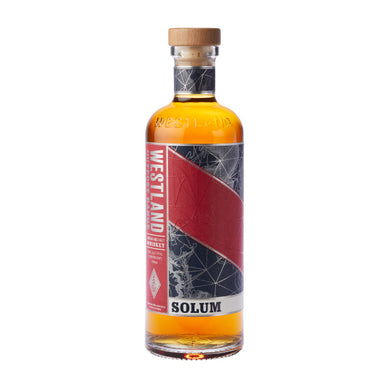
Our Peat Week release this year features two different single cask releases; one comprised of distilled Scottish peated malt and one of Washington State peated malt. Available in limited quantities starting February 21st.

Solum Edition 3
whiskey

Solum Edition 3

$149.99

Change Location

Continue Reading

Exploration

Your Farmer Has a Name

Your Farmer Has a Name
Exploration

The Land in Your Glass

The Land in Your Glass