Your cart

The Land in Your Glass

The Land in Your Glass

"We are in a place where the environment is equally as important as our distilling equipment."

Every whiskey begins somewhere.

Many workdays for a distiller are spent at the bubbling stills or surveying the casks of the quiet rackhouses. These are specific and industrial places, ones that can somewhat easily be replicated or repeated at that. But for us, place goes far beyond the warehouses or the buildings in which we create our whiskey. We are in a place where the environment is equally as important as our distilling equipment. These are things that hold immense value to us: soil, water, climate, and the subtle work of ecosystems that existed long before distillation. Things that we cannot simulate or create on our own; the terroir of the Pacific Northwest. The region announces itself constantly, in the smell of wet ferns after rain, in the salt air that drifts inland from the Puget Sound, in fields of barley that grow beneath the shadow of the Cascades.

At Westland Distillery, while the landscape serves as a breathtaking backdrop, we see it truly as something more: the beginning of the whiskey itself.

This is the story behind our environmental work. And during B Corp Month, it’s an opportunity to make something visible that is often invisible: the connection between the land and what’s in your glass.

A Region That Shapes Flavor

The Pacific Northwest is a landscape holding a wide spectrum of ecosystems, spanning from eelgrass beds and rocky reefs to temperate rainforests and vast coastal mudflats.

Tens of thousands of species call this place home. A home comprised of volcanic soils, maritime air, dense forests, and long agricultural traditions. These forces of life collide here in a way that produces ingredients unlike anywhere else in the world. For us as whiskey makers, that means possibilities in flavor.

Westland’s American Single Malt was born from a simple idea: what would whiskey taste like if it were truly shaped by the Pacific Northwest? And furthermore, what if we were in the ideal climate and place to create Single Malt?

To answer that question, we started with ingredients.

"Westland’s American Single Malt was born from a simple idea: what would whiskey taste like if it were truly shaped by the Pacific Northwest?"

Barley

It’s not lost on us that our home of Washington happens to be one of the world’s top growing regions for cool climate grass species like wheat and barley. Barley grown in Washington’s Skagit Valley carries the signature of coastal agriculture; cool summers, mineral-rich soil, and a climate that allows farmers to grow flavorful heritage grain varieties. These grains bring nuance and texture to the whiskey that extends beyond simple fermentation sugars.

"Barley grown in Washington’s Skagit Valley carries the signature of coastal agriculture; cool summers, mineral-rich soil, and a climate that allows farmers to grow flavorful heritage grain varieties."

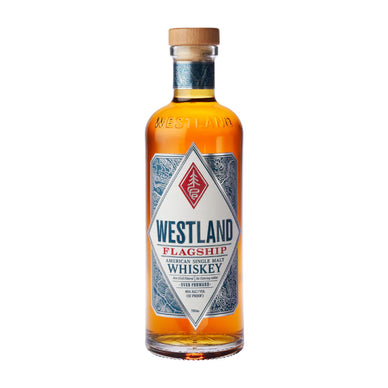
Westland Flagship
Whiskey

Westland Flagship

$59.99

Change Location

Peat

For generations, Scotch whisky has been defined by peat cut from Scottish bogs. Peat has variation in flavor based on where it develops. Peat is a special waterlogged dirt, and it is the preserved memory of the ecosystem that produced it. With about 1mm of growth per year, peat bogs are a slow growing ecosystem of plants, mosses, grasses, and the slow compression of organic matter over centuries.

Peat was a familiar fuel in Scotland to heat ovens and homes, and of course, help in the malting houses for barley. No one had sought out American Peat. Until we set about it with our own resolve.

Years in the making and we finally created it. American peat carries notes of forest floor, damp earth, and the quiet sweetness of decomposing vegetation. It is less medicinal than its Scottish counterpart, more woodland than coastline. When used carefully in whiskey production, it brings the aroma of the region’s forests directly into the spirit.

These ingredients define flavor; but they paint the scene even more beautifully. These ingredients create a whiskey intrinsically connected to a place.

"Peat was a familiar fuel in Scotland to heat ovens and homes, and of course, help in the malting houses for barley. No one had sought out American Peat. Until we set about it with our own resolve."

Peat Week 2026 - Augustus MacHuff
whiskey

Peat Week 2026 - Augustus MacHuff

$99.99

Change Location
Peat Week 2026 - Mossfire Mason
whiskey

Peat Week 2026 - Mossfire Mason

$99.99

Change Location

Oak

Perhaps nowhere is that connection clearer than in Westland’s work with garryana oak.

Garryana (or Garry oak) is a tree native to the Pacific Northwest, once widespread across Washington and Oregon but now reduced to a fraction of its historical range. Over the last two centuries, the typical pace of urban development and ecological shifts has dramatically affected the garryana oak because this species is a much slower growth species than its counterparts.

Working with partners to preserve this type of wood, create an entirely new supply chain, and harvest naturally fallen trees. Throughout the years-long journey with constant discovery along the way, Westland has established its most beloved and acclaimed series of whiskeys: Garryana.

Working with Garry Oak is a responsibility we do not take lightly. Harvesting from a species whose ecosystem is under pressure demands a long-term perspective. Along with careful sourcing, our team spends time and energy supporting restoration efforts and habitat protection for this rare species.

These landscapes of oak savannahs and rich with wildflowers, are among the most endangered ecosystems in North America. Supporting their recovery ensures that Garry oak remains part of the Pacific Northwest story for generations to come. If a whiskey celebrates a tree, the distillery should help protect the forest from which it came.

"These landscapes of oak savannahs and rich with wildflowers, are among the most endangered ecosystems in North America."

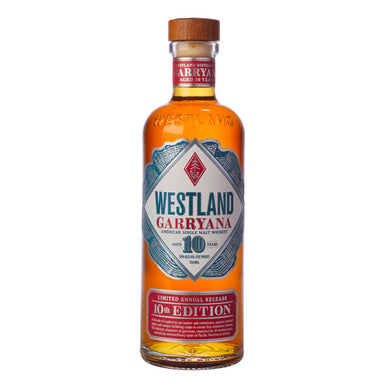
Garryana 10th Edition
Whiskey

Garryana 10th Edition

$149.99

Change Location

Stewardship as a Pillar

If the landscape shapes the whiskey, then caring for that landscape becomes part of the craft itself. Our work with farmers who wanted to do things differently has been integral to our business. Farming for the future of the soil and for the flavor of the ingredients. Quality over quantity is easier said than done. Environmental responsibility is the bedrock of our work at Westland and is not a separate program layered onto production. It is embedded in the choices that determine how our whiskey is made.

That begins with sourcing. Working with regional agriculture reduces transportation emissions while strengthening the local grain economy. Farmers across Washington State grow barley that feeds directly into the distillery’s production; it’s a value-added approach. What would have been money lost trying to sell in the animal feed market is now much more valuable when it can go to our distillery.

Our stewardship continues with energy. Our small distillery operates in a facility designed to meet Energy Star certification, ensuring that the energy used to keep our condensers running, our mash house churning, and our warehouses managed is operating as efficiently as possible. Distillation is inherently energy-intensive, but efficiency matters. Every improvement compounds over time.

And, of course, it would all be at a loss without spending time outside and giving back to the land that is so generous with us. Each year our team participates in environmental stewardship, shaping the future of the grass beneath our feet. Some days this is clearing invasive plant species; other times it is planting. These volunteer days bring immense meaning to the work we do at Westland.

"If the landscape shapes the whiskey, then caring for that landscape becomes part of the craft itself."

Why B Corp Matters

This philosophy of accountability is one of the reasons Westland chose to become a Certified B Corporation. B Corp certification evaluates businesses across multiple categories including governance, workers, community, and environment; each section measuring how companies balance profit with purpose. The Environment score reflects tangible commitments: energy efficiency, responsible sourcing, waste reduction, and ecosystem stewardship.

Westland had a particularly high score among other distilleries in the B Corp certification. This means the ingredients that shape the whiskey are chosen with intention, that the operations are designed with long-term impact in mind, and that as a company we hold ourselves accountable to independent standards that extend beyond the distillery walls.

During B Corp Month, that accountability becomes visible through transparency about how whiskey is made.

A Shared Responsibility

Ultimately, environmental stewardship is not something a distillery can accomplish alone. Even making whiskey is not done by oneself. It depends on farmers who care for soil season after season. It depends on conservationists restoring fragile ecosystems. It depends on researchers, coopers, and maltsters who believe flavor is inseparable from place.

And, equally as important, it depends on the people who choose to drink the whiskey.

Every bottle is a small vote for the kind of industry that should exist. One that values regional agriculture. One that protects forests and ecosystems. One that sees the technical skill of distilling as something more, as a responsibility to the land that makes it possible. That’s the quiet promise inside every bottle of Westland.

"Every bottle is a small vote for the kind of industry that should exist."

The Flavor of a Place

When you pour a glass of Westland, you taste the oak, the barley, and the signature fruit notes of our distillation style. But beyond that, you taste the forests slowly turning to peat beneath layers of moss, you taste spring barley being planted directly after brassicas, you taste oak trees that have found a new life after falling naturally in the wild landscape.
The Pacific Northwest is not simply where this whiskey is made, but it is why the whiskey tastes the way it does. And protecting that landscape ensures that future generations will be able to taste it too.

Single Cask #6659
Whiskey

Single Cask #6659

$99.99

Change Location

Continue Reading

Exploration

Peat Week: A Reflection On Years’ Past.

Peat Week: A Reflection On Years’ Past.
Exploration

A Closer Look: Scottish Peat vs. Pacific Northwest Peat

A Closer Look: Scottish Peat vs. Pacific Northwest Peat